
Serpentine belts are critical wear‑prone parts for American pickup trucks and SUVs.
For repair shop and DIYers, an aramid reinforced serpentine belt for US pickup and SUV delivers stable performance under heavy engine loads.
Without quality construction, poor belt material or surface finish will trigger squealing, unexpected stretch, cracking and premature failure.
This guide references SAE J1459‑2022 and SAE J2432‑2021 standards from SAE International. It breaks down mainstream aftermarket serpentine belt rubber compounds and back‑surface constructions.
Additionally, It also lists a selection of 18 aramid‑reinforced serpentine belt selection list. These aramid belts cover over 80% of common replacement demands for domestic US‑brand light and heavy duty pickups and SUVs.
Rubber Compound Tiers Of Aftermarket Serpentine Belts
Four major rubber formulations dominate mass‑produced aftermarket serpentine belts. Each tier targets different market segments and load conditions.
First, recycled rubber blend is the lowest‑cost entry‑level option. It delivers weak ozone resistance and short heat‑aging service life. It fits low‑budget short‑cycle replacement scenarios. For this reason, it is not recommended for heavy‑duty pickup or SUV applications.
Second, CR neoprene rubber belongs to older‑generation synthetic rubber. It provides decent oil resistance, yet its high‑temperature and anti‑ozone performance fall behind EPDM material.
Most CR belts pair with traditional bias‑angle calendered fabric back‑surface. It mainly serves economy‑grade aftermarket segments.
Third, conventional 40‑60% EPDM rubber is today’s mass‑market standard. EPDM brings solid ozone and heat‑aging advantages versus CR rubber. Even so, medium‑low EPDM content cannot sustain heavy torque from large‑displacement truck motors. Repair technicians often report tensile‑cord creep and back‑surface cracking after long service cycles.
Fourth, premium aramid reinforced high‑content EPDM (70% and above) targets heavy‑duty replacement. Aramid, also known as Kevlar, minimizes permanent stretch under shock torque.
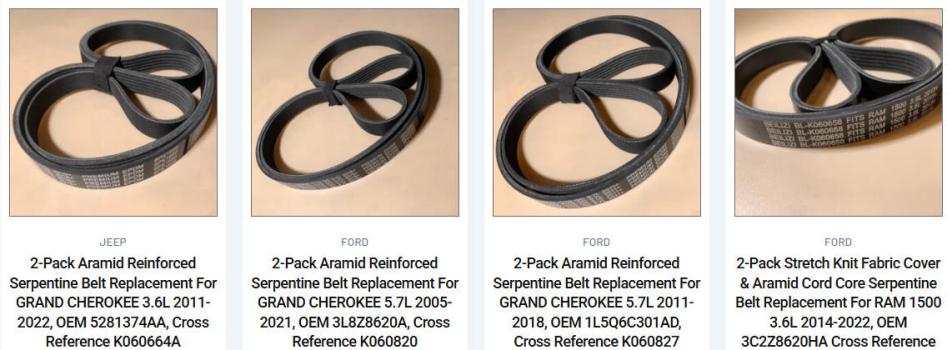
The complete Beilizi serpentine belt lineup uses 75% EPDM compound with aramid reinforcement, meets core performance requirements defined in SAE J2432‑2021.
Four Main Back‑Surface Constructions For Serpentine Belts
The belt's back surface contacts idler pulleys directly. This layer determines noise performance, heat dissipation and overall service life. Four mainstream surface types exist in today’s aftermarket supply chain.
Raw Back‑Surface (Budget Grade)
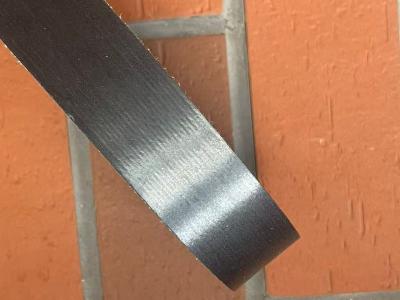
Smooth raw back surface belongs to ultra‑low‑cost aftermarket products. These belts rely on basic low‑grade tensile cords. Clear longitudinal cord imprint marks appear on belt rear face.
With extended runtime, base rubber bleeds through to outer surface. For this reason this design brings higher squeal risk against idler pulleys. It suits quick‑fix low‑budget projects, not heavy‑duty pickup usage.
Non-Stretch Canvas Fabric Back‑Surface (Traditional Canvas)
Bias‑cut calendered fabric is the oldest mass‑production surface technology. Manufacturers usually match it with CR neoprene rubber.
Cross‑weave canvas texture is visible to the eye. Its main weakness is very limited stretch capability. Misalignment or transient overload easily creates rubber‑fabric interface cracks.
This is bias-cut canvas back. It features a cross-weave pattern with visible knots where threads intersect. Do not confuse it with stretch fabric back. It has nearly zero stretch.
This product targets legacy low‑to‑mid tier economy replacement markets.
Grain Back or Dotted Matte Molded‑Dot Surface (Modern Mainstream Premium)
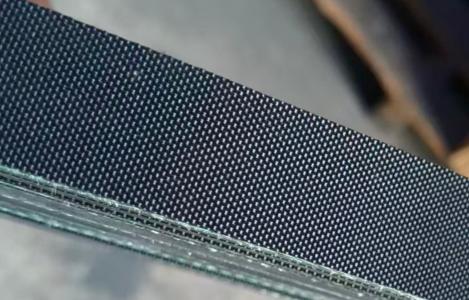
Dotted matte one‑piece molded‑dot surface is widely adopted in the modern premium aftermarket.
Raised integrated dots greatly improve anti‑squeal performance and thermal dissipation during pulley contact.
Part of our aramid reinforced serpentine belt series uses this dotted matte back surface, check details of this Chevy Silverado drive belt.
Stretch Fabric or Elastic Twill Fabric Back‑Surface (Premium Noise‑Reduction Grade)
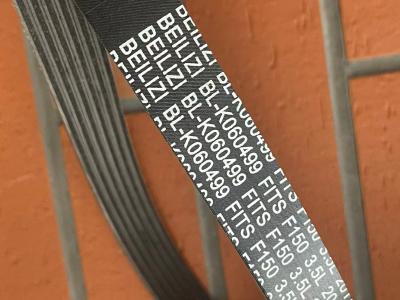
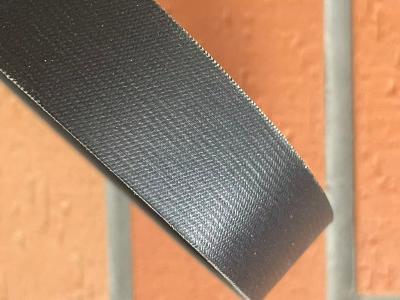
Elastic twill fabric back surface delivers a smooth, neat weave with controlled elasticity. It provides top‑tier noise reduction and high‑heat resistance.
When the belt runs over large‑angle reverse‑bend idler pulleys, conformal contact improves greatly. Slippage‑caused squeal drops significantly. The rest of our heavy‑duty inventory adopts this elastic twill fabric back‑surface.
This is stretch fabric back. It uses a unidirectional twill weave with parallel diagonal lines, no woven knots. Do not mix it up with non-stretch bias-cut canvas back.
Aramid‑Reinforced Serpentine Belt Application Reference Table for US Market
The table above lists our 18 aramid reinforced serpentine belt portfolio. These parts cover mainstream US pickup and SUV platforms. Columns include OE Number, Cross Reference, Specification, Fitment
Practical Installation Guidance For Repair Shops And DIYers
Always inspect the automatic belt tensioner and idler pulleys while replacing a serpentine belt. Worn or seized tensioners will shorten new belt service life sharply, even for premium‑grade aramid‑reinforced units.
Before ordering, cross‑verify the OE number, cross‑reference number, rib count and effective length against your original removed belt. This simple check avoids wrong‑part shipping and wasted labor hours.
Final Thoughts On Selecting Serpentine Belts For US Trucks & SUVs
Price alone should never be your main decision factor for serpentine belt replacement. Rubber compound percentage, aramid tensile‑cord reinforcement and back surface manufacturing all shape real‑world service life, noise performance and anti‑stretch capability.
This is especially true for high‑load, large‑displacement American pickup trucks and SUVs. Many repair shops and independent mechanics struggle with inflated costs caused by brand premiums and multi‑layer middleman markups across traditional supply chains.
By cutting out intermediate distributors, we deliver our aramid reinforced 75%‑EPDM serpentine belt series as a direct supply option targeted at professional repair facilities.
Without stacked supplier surcharges, our heavy‑duty serpentine belts deliver compelling value for fleet workshops and independent mechanics, alongside reliable build quality that meets SAE performance benchmarks.
Our product lineup offers both dotted‑matte and elastic twill fabric back surface options to fit different application preferences for repair shop fleets and individual DIY vehicle owners.
Follow us on YouTube for vehicle‑part installation tutorials and product demonstrations. Follow our Facebook page for new‑product announcements, technical tips and aftermarket part updates.